Capital Gains Tax on Nevada Home Sales (2026)
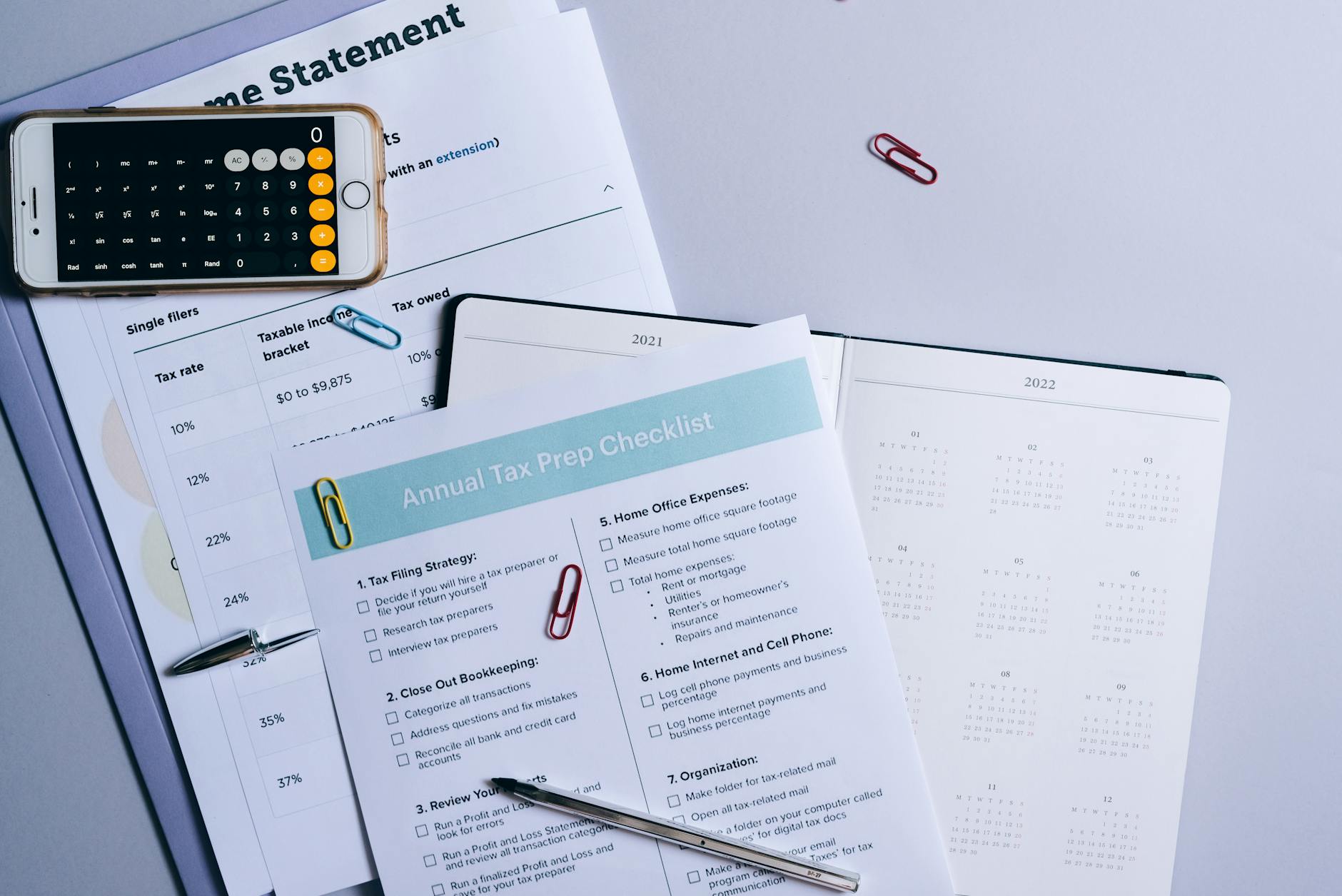
Nevada has no state income tax, so home sellers pay only federal capital gains tax on the gain above the §121 primary-residence exclusion ($250K single / $500K married filing jointly, if you have lived in the home 2 of the last 5 years). Investment properties get no §121 exclusion but qualify for §1031 like-kind exchanges. Depreciation recapture is taxed at up to 25% federal regardless. This is general information — confirm with a Nevada CPA before closing.
Does Nevada tax the sale of a home?
No. Nevada does not have a state income tax, so the gain on the sale of a Nevada home is not taxed by the State of Nevada. Sellers are responsible only for federal capital gains tax (and potentially Net Investment Income Tax) on whatever gain exceeds applicable exclusions.
This makes Nevada one of the most tax-efficient states in the country to sell appreciated real estate. For comparison, California taxes capital gains as ordinary income at marginal rates up to 13.3% — meaning a $500K capital gain realized in California can carry a $66K state tax bill that simply does not exist in Nevada.
The §121 primary-residence exclusion (the big one)
If the Las Vegas home you are selling has been your primary residence for at least 2 of the last 5 years, IRC §121 lets you exclude up to $250,000 of gain (single filers) or $500,000 (married filing jointly) from federal capital gains tax. This applies once every 2 years.
Crucially, the 2-of-5-year test does not have to be consecutive — you can split it. And the use and ownership tests are separate (you must own AND have used the home as your primary residence, but not necessarily during the same 24 months).
- Single filer: Up to $250,000 of gain excluded.
- Married filing jointly: Up to $500,000 of gain excluded (both spouses must meet the use test; only one needs to meet ownership).
- Partial exclusion: Available if you sold early due to job relocation, health, or unforeseen circumstances (proration based on months of qualifying use).
- Available once every 2 years: Cannot use §121 again within 2 years of a prior §121 exclusion claim.
Federal capital gains rates that apply to the excess
On any gain above the §121 exclusion (or on the full gain for an investment property), federal long-term capital gains rates apply if you owned the property more than 12 months:
Short-term (held under 12 months) gains are taxed as ordinary income at federal marginal rates up to 37%. Holding past the 12-month mark to qualify for long-term treatment is one of the most consequential timing decisions in any sale.
| Filing status | 0% bracket | 15% bracket | 20% bracket |
|---|---|---|---|
| Single (2026 thresholds) | Up to ~$48,350 | $48,351 – $533,400 | $533,401+ |
| Married filing jointly (2026) | Up to ~$96,700 | $96,701 – $600,050 | $600,051+ |
§1031 exchanges (investment property only)
If the Las Vegas property you are selling is an investment or business property — not a primary residence — IRC §1031 lets you defer the entire capital gain by exchanging into a like-kind replacement property. The rules are strict:
- 45 days to identify replacement property in writing after closing on the relinquished property.
- 180 days to close on the replacement (or by your tax-return due date including extensions, whichever is earlier).
- Qualified intermediary required — you cannot touch the proceeds.
- Must be like-kind real property held for investment or business use (residential rental ↔ commercial ↔ raw land all qualify).
- Equal-or-greater rule — to fully defer, the replacement property's purchase price and debt must equal or exceed the relinquished property's. Any 'boot' (cash or debt reduction) is taxable.
Depreciation recapture (the trap most sellers miss)
If you ever rented out the Las Vegas property — even short-term — and claimed depreciation on a tax return, the IRS recaptures that depreciation at sale. Recapture is taxed at up to 25% federal regardless of your other income. The §121 primary-residence exclusion does NOT shield depreciation recapture.
This is a common surprise for sellers who Airbnb'd or long-term-rented the home for a stretch before moving back in. Have your Nevada CPA pull every Schedule E and Form 4562 you ever filed for the property before listing.
“I have closed deals where the seller's net was $40,000 less than they expected — purely depreciation recapture from a 3-year rental period a decade earlier. That is not the kind of surprise you want at signing. Pull every prior tax return on the property before we list.”
Frequently asked questions
Do I owe Nevada tax when I sell my Las Vegas home?+
No. Nevada has no state income tax, so the State of Nevada does not tax the gain on a home sale. Sellers are responsible only for federal capital gains tax (and potentially Net Investment Income Tax) on gain exceeding applicable exclusions.
How much is capital gains tax on a home sale in Nevada?+
If the home was your primary residence for 2 of the last 5 years, IRC §121 excludes up to $250,000 of gain (single) or $500,000 (married filing jointly) from federal tax. Gain above that is taxed at federal long-term capital gains rates (0%, 15%, or 20%) plus potentially 3.8% Net Investment Income Tax. There is no Nevada state tax.
What is the §121 primary-residence exclusion?+
IRC §121 lets sellers exclude up to $250,000 (single) or $500,000 (married filing jointly) of capital gain on the sale of a primary residence if they owned and used the home as their primary residence for at least 2 of the last 5 years. Available once every 2 years. Partial exclusion is available for early sales due to job relocation, health, or unforeseen circumstances.
Can I do a 1031 exchange on my Las Vegas rental property?+
Yes. IRC §1031 like-kind exchanges work on Las Vegas investment and business real estate, with the standard rules: 45 days to identify replacement property, 180 days to close, qualified intermediary required, like-kind real property only. Stephen coordinates with vetted Nevada qualified intermediaries on 1031 exchanges regularly.
How does Nevada compare to California for capital gains tax?+
Dramatically. California taxes capital gains as ordinary income at marginal rates up to 13.3%, while Nevada has no state tax on capital gains at all. On a $500,000 gain, that is up to ~$66,000 in California state tax that simply does not exist in Nevada.
What is depreciation recapture and does it apply to my home sale?+
Depreciation recapture applies if you ever claimed depreciation on the property — most commonly because you rented it out (long-term or short-term) at any point. Recapture is taxed at up to 25% federal regardless of other income, and the §121 primary-residence exclusion does NOT shield it. Pull every Schedule E and Form 4562 you ever filed for the property and bring them to your Nevada CPA before listing.
Should I sell before or after I move out of Las Vegas?+
If you are establishing residency in another state with income tax, the timing of the sale relative to your move-out date can affect your overall tax bill — especially if the destination state taxes capital gains on income earned while you were a Nevada resident. This is fact-specific. Consult a CPA in the destination state before closing.
Sources

Stephen Tomes
REALTOR® at Huntington & Ellis, A Real Estate Agency. 20+ years in Las Vegas real estate, 78+ closed Vegas transactions. Nevada license BS.0146591. Reach Stephen at (702) 703-9077 or stomes@huntingtonandellis.com.